

How it works
From the shipment email to the filed declaration, in five steps. Athren prepares the case; your declarant decides and files it.
The shipment email arrives.
With the invoice, the packing list and the bill of lading.
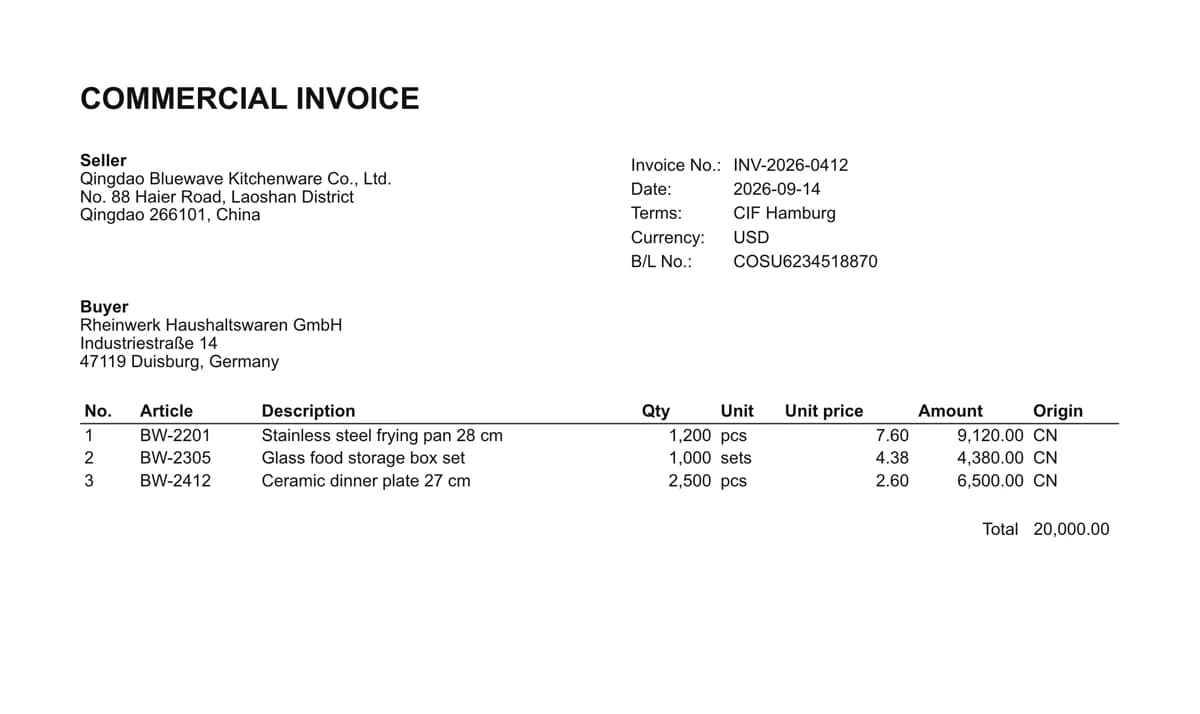
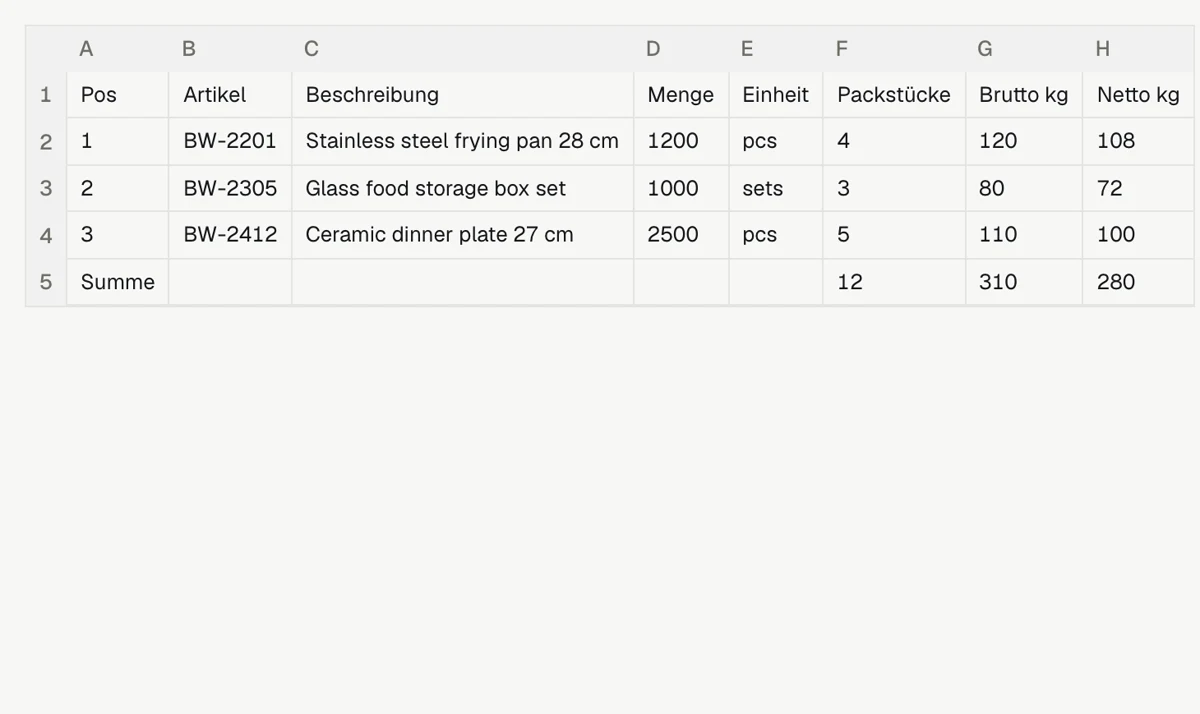
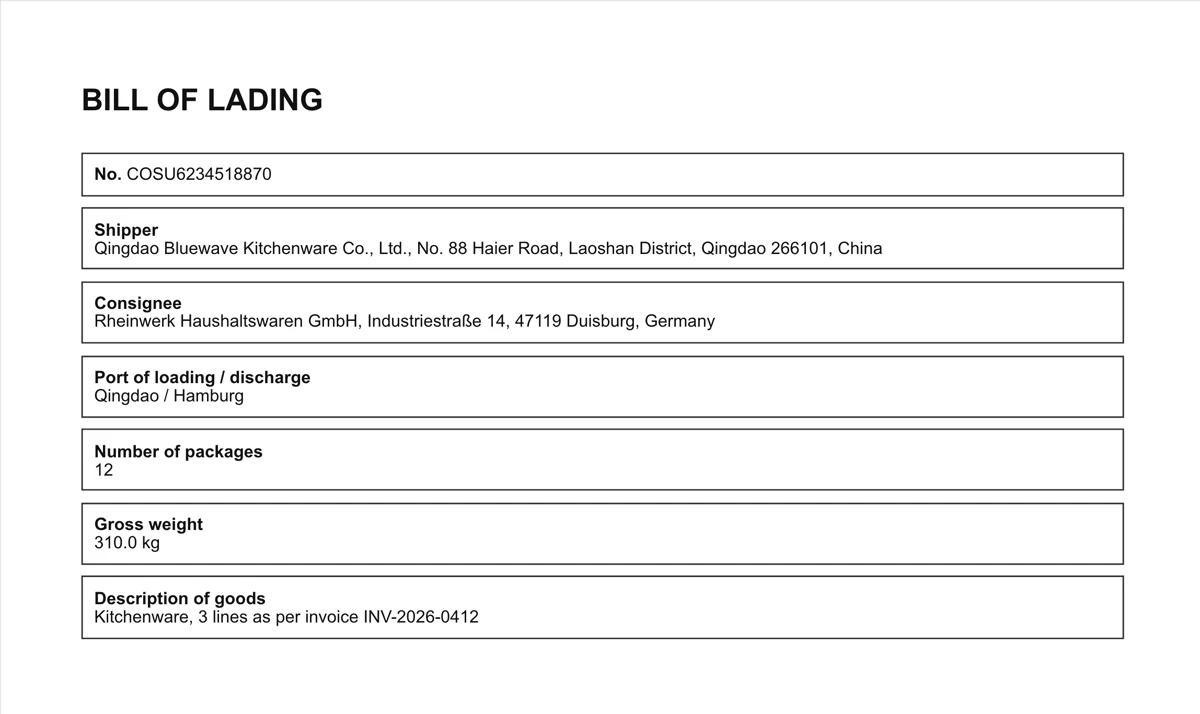
A case starts the way it always does: an email from the importer or the forwarder with the documents attached. Athren reads the email and each document attached to it, and builds one case from them.
- Commercial invoice
- Packing list
- Bill of lading
Athren fills in the declaration.
Every value comes from a document.
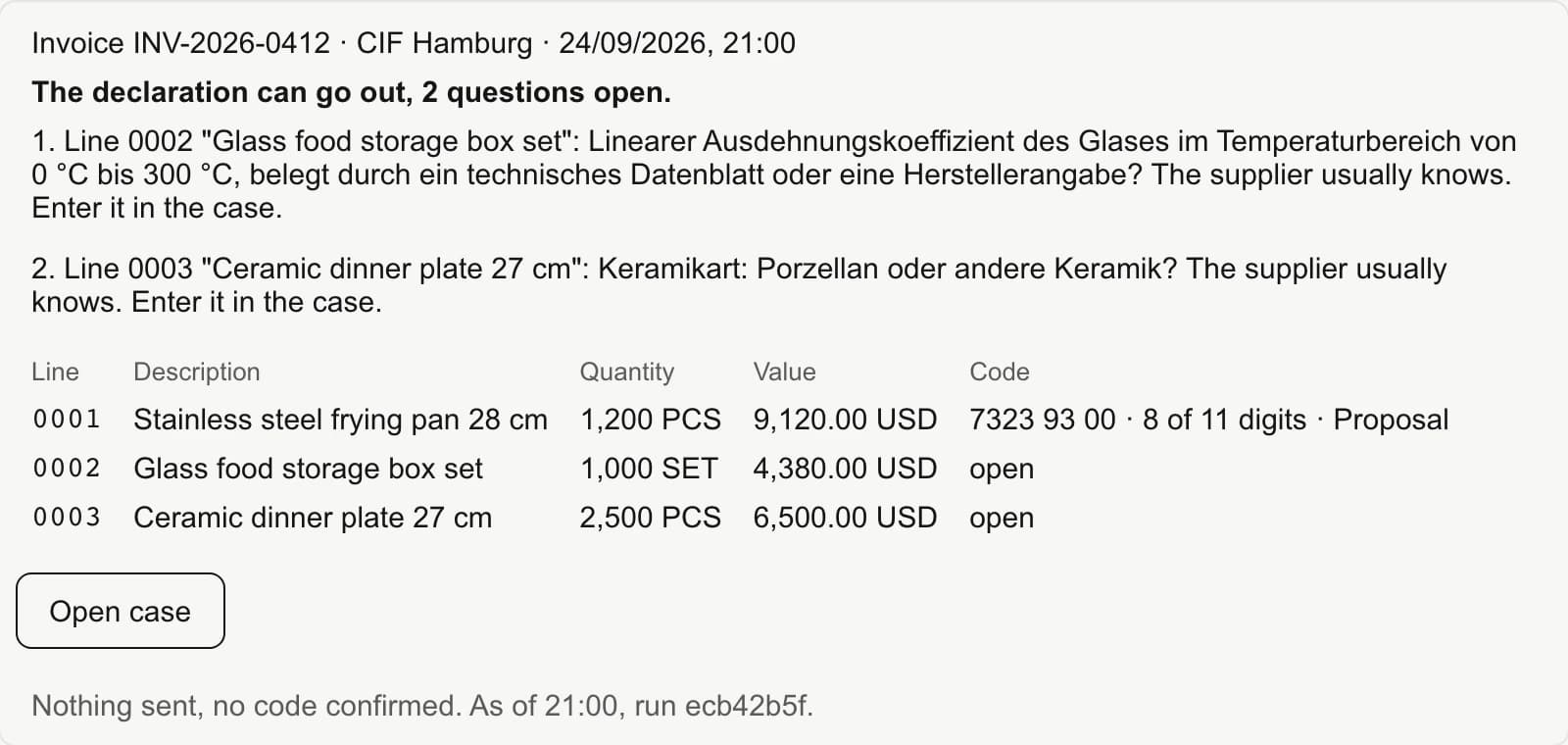
The header and every line: the terms and the currency, then each line’s description, quantity, value and origin. Every value is read from one of the documents, and Athren keeps where it found it, so your declarant checks a value instead of retyping it.
It proposes the code.
8 of 11 digits, marked as a proposal.
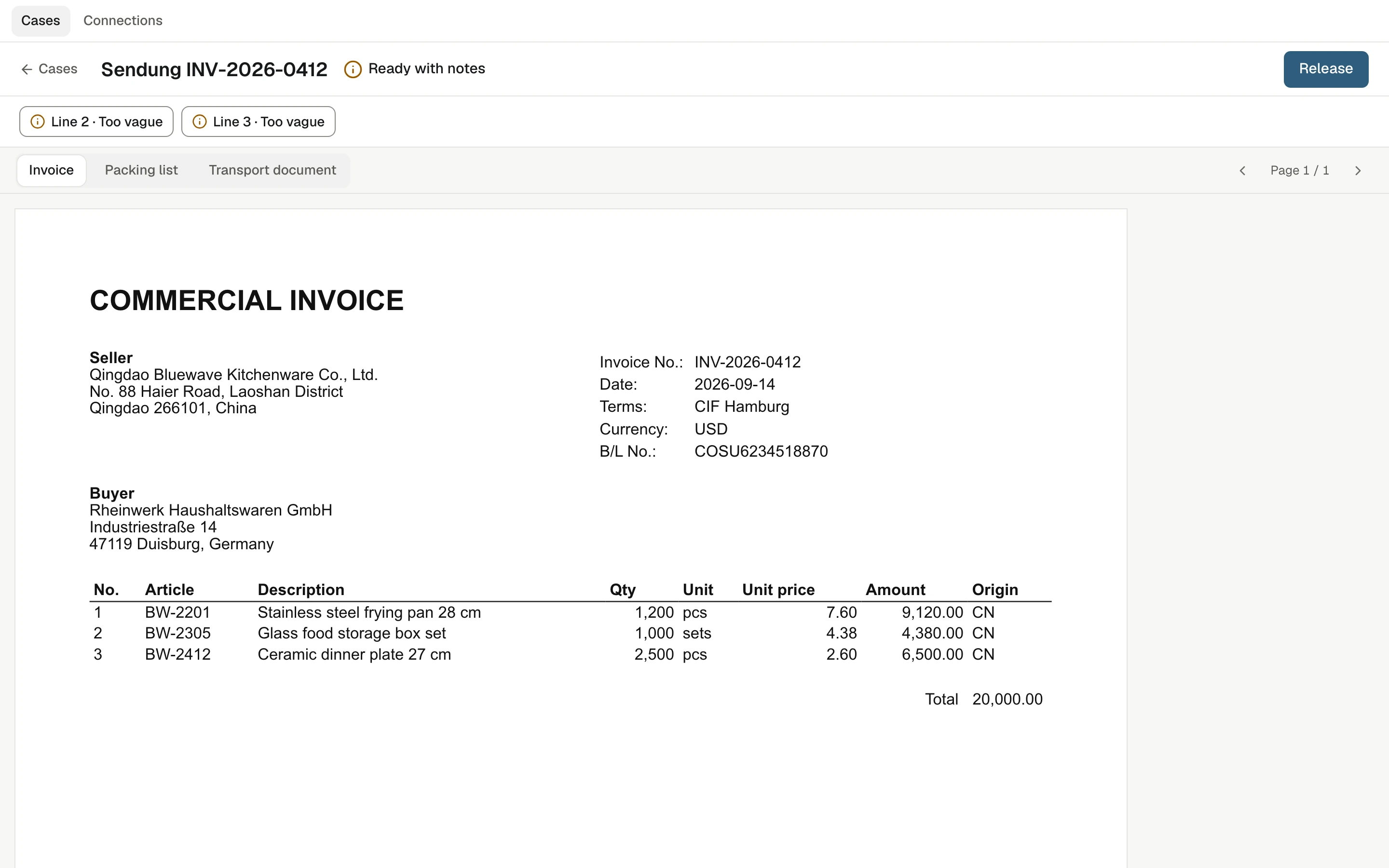
Where the invoice describes the goods clearly, Athren proposes a commodity code to the depth the documents support. The frying pan gets 7323 93 00, eight of the eleven digits a German declaration needs. It stays a proposal until your declarant decides.
It asks what the invoice does not say.
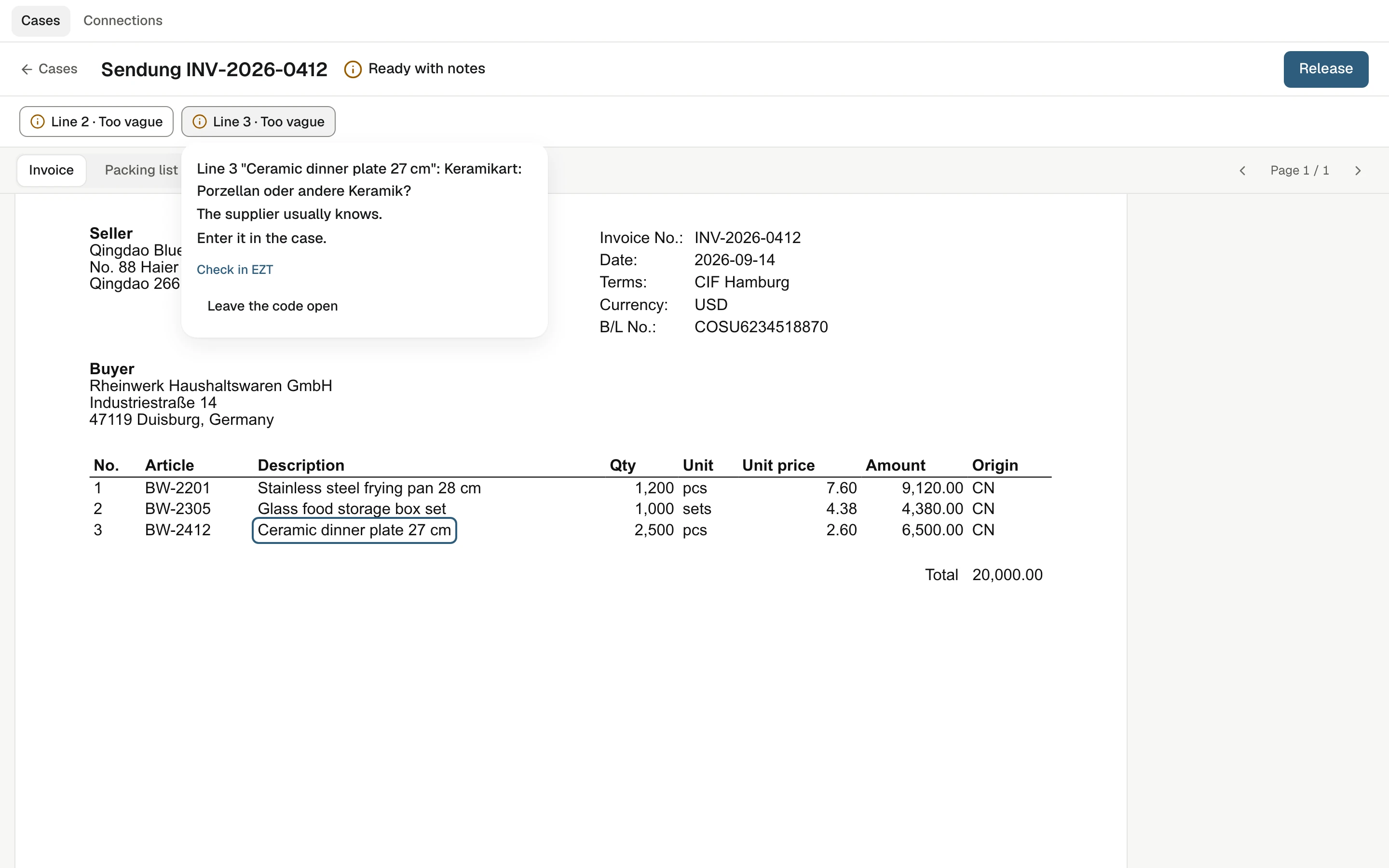
Porcelain or other ceramic? The supplier usually knows.
Some lines cannot be coded from the invoice alone. A ceramic dinner plate is porcelain or other ceramic, and the tariff treats the two differently. Athren leaves that code open and writes the question, with the invoice line outlined. Declarants told us questions like this turn a two-minute declaration into half a day.
You file the declaration.
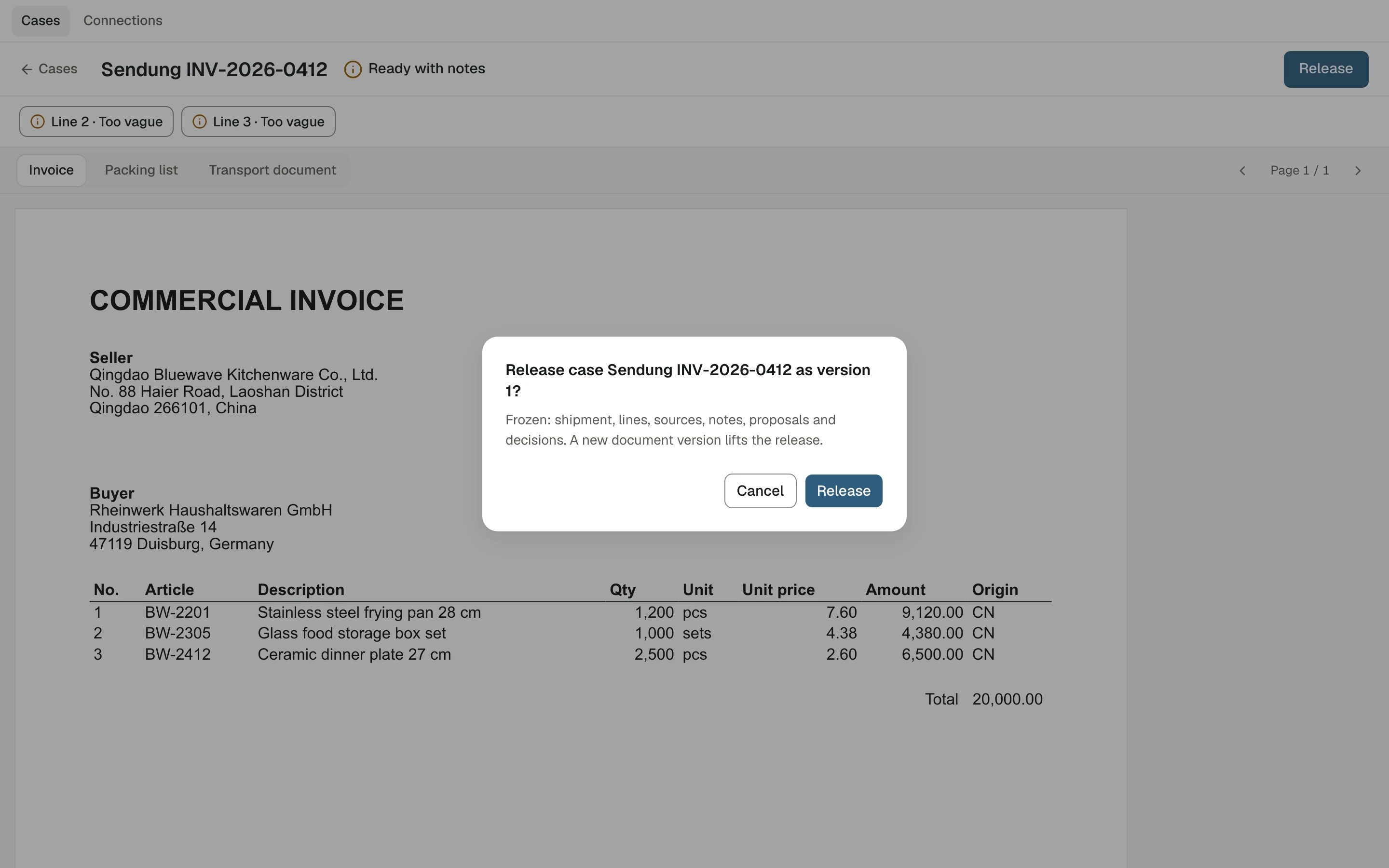
Athren files nothing. Press Release, download it and file it in your customs system.
When every question is answered, or left open on purpose, your declarant presses Release. That freezes the case as version 1, with its lines, sources, notes and decisions. They download it and file it in the customs system they already use. Athren sends nothing on its own.
Send us 20 past cases.
For customs brokers in Germany and the Netherlands. We prepare each one, you judge the result.
Pick a time below for a thirty-minute call, or write to us.
Loading the calendar… Book on cal.com